Table of Contents
- 🏡 Introduction: Welcome to the World of Dog Parenting
- 🍼 Preparing Your Home for a New Dog or Puppy
- 🥩 Dog Nutrition & Diet: Feeding for Lifelong Health
- 🐕🦺 Basic Dog Training & Positive Reinforcement
- 🧼 Grooming & Hygiene Standards at Home
- 🏃♂️ Exercise, Mental Stimulation & Playtime
- 🩺 Preventive Healthcare & Routine Vet Care
- 🛑 Common Dog Care Mistakes to Avoid
- ❓ Frequently Asked Questions (FAQs)
- ❤️ Final Thoughts & Conclusion
1. Introduction: Welcome to the World of Dog Parenting 🏡🐕
Bringing a dog into your home is one of the most exciting, rewarding, and heartwarming decisions you will ever make. Dogs bring endless enthusiasm, loyal companionship, and pure joy into our lives. Whether you are adopting an energetic puppy, a high-energy young dog, or a gentle senior rescue, you are opening your heart to a unique friend who will quickly become a cherished family member.
However, becoming a dog parent also comes with important responsibilities. Dogs rely entirely on us for their daily meals, physical shelter, health checkups, mental exercise, and emotional stability. If you are a first-time dog owner, navigating through nutrition charts, training techniques, and medical guidelines can feel overwhelming at first.
That is exactly why we created this comprehensive dog care guide for beginners at Ehsan Pets Hub. Our goal is to break down every aspect of dog ownership into practical, stress-free, and easy-to-follow steps. From puppy-proofing your living room to choosing high-quality food and mastering basic commands, this guide covers everything you need to build a happy, healthy relationship with your dog. ✨
2. Preparing Your Home for a New Dog or Puppy 📦🏠
Before you bring your furry companion through the front door, proper preparation is essential. Setting up a safe, cozy environment beforehand helps your new dog feel welcome, reduces anxiety, and keeps potential hazards out of reach.
🔌 Step 1: Puppy-Proofing Your Living Space
Dogs—especially curious puppies—explore the world using their mouths. To prevent accidental poisonings or injuries, follow this safety checklist:
- ⚡ Secure Electrical Cords: Hide loose cables, charger wires, and extension cords behind heavy furniture or use cable concealers.
- 🌿 Remove Toxic Houseplants: Common household plants like Lilies, Aloe Vera, Philodendrons, and Sago Palms are toxic to dogs. Keep them completely out of reach.
- 🗑️ Cover Trash Cans: Ensure kitchen and bathroom bins have heavy, locking lids to prevent your dog from eating spoiled food or sharp packaging.
- 🧴 Store Household Chemicals: Keep cleaning supplies, detergents, pesticides, and human medications locked inside high cabinets.
🛒 Step 2: Essential Dog Supplies Checklist
Having the right supplies on day one makes the transition smooth for both you and your dog. Here is what you should get:
| Category | Essential Items |
| Feeding | Stainless steel or ceramic bowls (for food and fresh water) |
| Sleeping | Washable orthopaedic or plush dog bed, cozy blankets |
| Walking Gear | Adjustable collar, sturdy harness, and a 6-foot nylon leash |
| Grooming | Dog-safe shampoo, slicker brush, nail clippers, ear cleaning wipes |
| Entertainment | Chew toys, rubber Kong toys, puzzle feeders, durable balls |
| Training | Soft training treats, crate, puppy pee pads |
🛏️ Step 3: Setting Up a Safe Zone
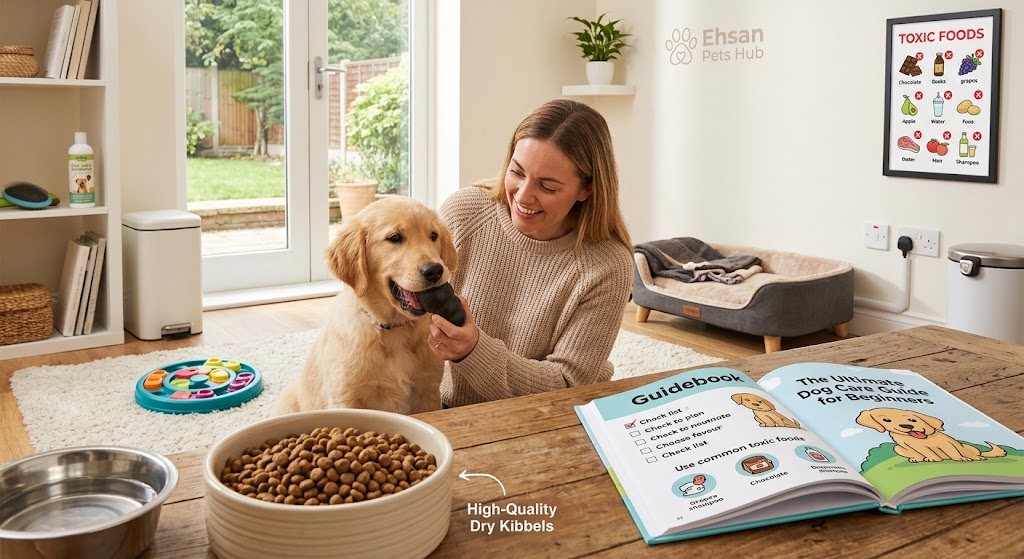
Designate a quiet, low-traffic area in your house as your dog’s dedicated space. Place their bed, crate, and favorite chew toys here. Having a predictable space allows your dog to retreat and rest whenever they feel overwhelmed by new sights, sounds, or visitors.
3. Dog Nutrition & Diet: Feeding for Lifelong Health 🥩🥗
Proper nutrition is the cornerstone of your dog’s long-term vitality, immune strength, and longevity. Feed your dog according to their specific age, breed size, and activity levels.
🍖 Understanding Dog Food Categories
When shopping for dog food, you will generally encounter three main options:
- Commercial Dry Kibble: Convenient, cost-effective, and helps maintain dental health by reducing plaque buildup. Look for brands that list a real meat protein (such as chicken, beef, or salmon) as the very first ingredient.
- Wet / Canned Food: Rich in moisture and highly palatable. Great for picky eaters, senior dogs, or dogs needing extra hydration.
- Fresh or Home-Cooked Diets: High-quality, real-food ingredients. If choosing this option, always work with a veterinary nutritionist to ensure balanced vitamin and mineral ratios.
🚫 Toxic Foods You Must NEVER Feed Your Dog
Human food isn’t always safe for canine digestion. Keep the following toxic foods completely away from your pet:
- 🍫 Chocolate & Cocoa: Contains theobromine, which causes heart issues and seizures.
- 🍇 Grapes & Raisins: Can cause sudden kidney failure in dogs, even in small amounts.
- 🧅 Onions & Garlic: Damages red blood cells, leading to severe anemia.
- 🍬 Xylitol (Artificial Sweetener): Found in sugar-free gum, peanut butter, and candies; causes rapid liver failure.
- ☕ Caffeine & Alcohol: Highly toxic to the nervous system and internal organs.
- 🥑 Avocados: Contains persin, which causes digestive upset.
🥣 Establishing a Feeding Schedule
Consistency brings comfort to dogs. Instead of leaving food out all day (free-feeding), stick to structured meal times:
- Puppies (under 6 months): 3 to 4 small meals per day to maintain blood sugar levels.
- Adult Dogs (1 to 7 years): 2 balanced meals per day (morning and evening).
- Senior Dogs (7+ years): 1 to 2 light, high-fiber meals tailored for lower activity levels.
Always make sure fresh, clean drinking water is accessible 24/7! 💧
4. Basic Dog Training & Positive Reinforcement 🐕🦺🦴
Training is far more than teaching tricks; it establishes clear communication, builds trust, and keeps your dog safe in public settings.
🌟 The Power of Positive Reinforcement
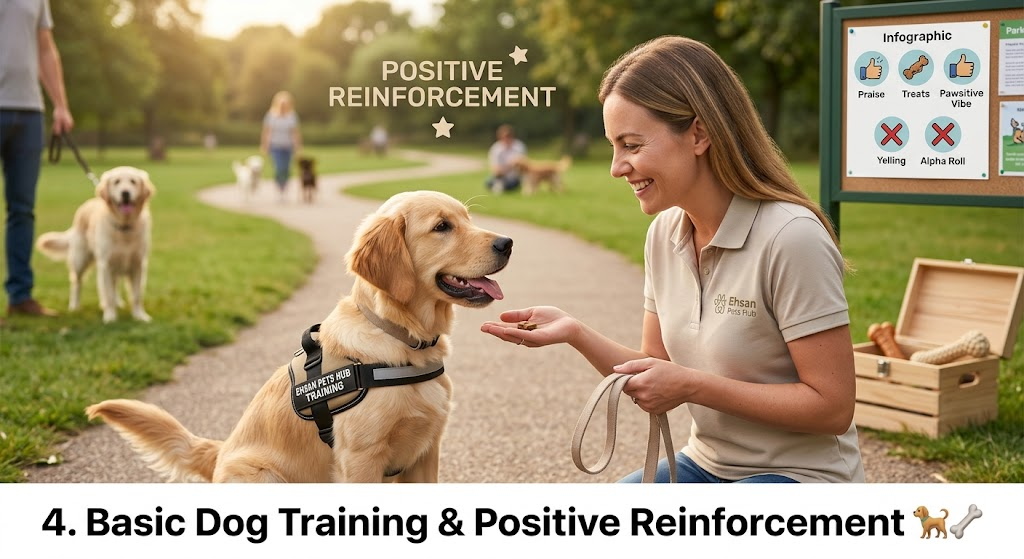
Modern, science-based dog training relies on positive reinforcement. Whenever your dog performs a desirable behavior, immediately reward them with high-value treats, verbal praise (“Good boy!”), or physical affection. Never use harsh physical punishment, yelling, or alpha-rollovers, as these cause fear, anxiety, and aggression.
🎯 4 Essential Commands Every Dog Should Know
1. “Sit”
- Hold a small treat close to your dog’s nose.
- Move your hand upward over their head, allowing their eyes to follow the treat. As their head goes up, their bottom will naturally lower to the ground.
- As soon as their rear touches the floor, say “Sit,” give the treat, and offer enthusiastic praise!
2. “Stay”
- Ask your dog to “Sit.” Open your palm toward them and say “Stay.”
- Take one small step backward. If they stay in place, step back, give the treat, and reward them.
- Gradually increase the distance and duration over time.
3. “Come” (The Recall Command)
- Put a leash on your dog and step back a few feet.
- Get down on their level, use an encouraging voice, and say “Come!”
- When they trot over to you, immediately reward them with treats. This command can save your dog’s life in dangerous situations!
4. “Leave It”
- Hold a treat in a closed fist. Your dog will sniff, lick, or paw at your hand.
- Ignore the behavior until they back away. The second they pull back, say “Leave it” and give them a different treat from your other hand.
🚽 Potty Training Basics
- Take Them Out Frequently: Take puppies outside every 2 hours, right after waking up, after eating, and after play sessions.
- Pick a Designated Spot: Take them to the exact same spot in the yard so they recognize the scent.
- Reward Success: Immediately praise and treat them as soon as they finish peeing or pooping outside.
- Clean Accidents Thoroughly: Use an enzymatic cleaner to completely remove urine odors, so your dog isn’t tempted to soil the same indoor spot again.
5. Grooming & Hygiene Standards at Home 🧼✂️
Regular grooming keeps your dog looking handsome while preventing painful matting, skin infections, and overgrown nails.
🪮 Brushing Guidelines
- Short Coats (e.g., Beagles, Labradors): Brush once or twice a week with a rubber curry brush or bristle brush to remove loose hair.
- Long or Double Coats (e.g., Golden Retrievers, Huskies): Brush 3 to 4 times a week using an undercoat rake and slicker brush to prevent knots and mats.
🛁 Bathing Frequency
Unless your dog rolls in mud, most dogs only need a bath once every 4 to 6 weeks. Over-bathing strips away natural oils, leading to dry, itchy skin. Always use a dedicated, pH-balanced dog shampoo—never use human shampoo!
💅 Nail Trimming & Dental Health
- Nail Care: Trim your dog’s nails every 3 to 4 weeks. If you hear their nails clicking against the hard floor, they are too long. Be careful to avoid clipping the “quick” (the blood vessel inside the nail).
- Dental Hygiene: Brush your dog’s teeth 2 to 3 times a week using a dog-safe toothpaste (human toothpaste contains fluoride which is toxic). Dental chews and chew toys also help scrape away plaque.
6. Exercise, Mental Stimulation & Playtime 🏃♂️🎾
A tired dog is a happy, well-behaved dog! Physical exercise burns off excess energy, while mental enrichment prevents boredom, chewing, and destructive behaviors.
🏃 Daily Physical Exercise Requirements
- Low Energy / Small Breeds (e.g., French Bulldogs, Chihuahuas): 30 minutes of light walking and backyard play daily.
- High Energy / Working Breeds (e.g., German Shepherds, Border Collies): 60 to 90+ minutes of vigorous exercise daily (running, hiking, agility, fetch).
🧠 Mental Enrichment Games
Dogs love working for rewards! Keep their minds sharp with these simple home activities:
- Puzzle Toys & Lick Mats: Fill rubber Kong toys with peanut butter (xylitol-free) and freeze them for hours of licking entertainment.
- Hide and Seek: Hide small treats around the living room and encourage your dog to “Find it!” using their incredible sense of smell.
- Snuffle Mats: Hide dry kibble inside a fabric snuffle mat to encourage natural foraging behaviors.
7. Preventive Healthcare & Routine Vet Care 🩺🏥
Staying proactive with your dog’s health prevents costly medical emergencies and ensures a long, vibrant life.
📅 Essential Healthcare Milestones
- Puppy Vaccinations: Core vaccines (Rabies, DHPP) start around 6 to 8 weeks of age and continue in boosters every 3 to 4 weeks until 16 weeks old.
- Annual Wellness Exams: Adult dogs should visit the vet once a year for a physical exam, heartworm check, and routine boosters. Senior dogs benefit from bi-annual checkups.
- Parasite Prevention: Maintain year-round protection against fleas, ticks, heartworms, and intestinal worms through monthly oral chewables or topical treatments recommended by your vet.
- Spaying / Neutering: Discuss the best timing with your vet. Spaying or neutering prevents unwanted litters, reduces roaming behaviors, and lowers the risk of uterine or testicular cancers.
🚨 Signs Your Dog Needs Medical Attention
Contact your veterinarian immediately if you notice:
- Lethargy or refusal to eat for more than 24 hours.
- Repeated vomiting or severe, watery diarrhea.
- Whining, limping, or showing pain when touched.
- Excessive drinking and unusually frequent urination.
- Unexplained coughing, wheezing, or difficulty breathing.
8. Common Dog Care Mistakes to Avoid 🛑⚠️
Avoid these frequent pitfalls to give your dog the best possible care:
- ❌ Skipping Socialization: Failing to introduce young puppies to diverse sounds, people, surfaces, and friendly animals during their early window (8 to 16 weeks) can lead to fear-based reactivity later.
- ❌ Inconsistent Rules: Allowing your dog on the sofa on weekdays but scolding them for it on weekends confuses them. Keep house rules consistent across all family members.
- ❌ Overfeeding Treats: High-calorie treats should make up no more than 10% of your dog’s total daily caloric intake to prevent canine obesity.
- ❌ Leaving Dogs in Hot Cars: Temperatures inside a parked car can reach dangerous levels within minutes, even with open windows. Never leave your dog unattended in a vehicle!
9. Frequently Asked Questions (FAQs) ❓💬
Q1: How long does it take for a new dog to adjust to my home?
Answer: Follow the 3-3-3 Rule:
- First 3 Days: The dog feels overwhelmed and timid.
- First 3 Weeks: The dog begins settling in, feeling comfortable, and learning your daily routine.
- First 3 Months: The dog feels completely secure, builds deep trust, and shows their true personality.
Q2: How often should I walk my dog?
Answer: Most adult dogs benefit from at least two 20 to 30-minute walks per day. Walks provide essential physical exercise, potty opportunities, and outdoor mental stimulation.
Q3: Why is my dog chewing on furniture?
Answer: Chewing is a natural canine behavior. Puppies chew to relieve teething discomfort, while adult dogs chew due to boredom, anxiety, or lack of physical exercise. Provide safe chew toys and redirect them whenever they chew inappropriate household items.
10. Final Thoughts & Conclusion ❤️🐾
Pet parenting is a continuous journey filled with love, learning, and unforgettable moments. While caring for a dog takes patience, consistency, and dedication, the unconditional love, warm welcome at the door, and faithful companionship you receive in return make every moment worth it.
By following the nutrition, grooming, training, and healthcare steps outlined in this guide, you are setting your dog up for a long, happy, and thriving life by your side. 🌟
Thank you for choosing Ehsan Pets Hub as your trusted source for pet care guides! Explore our blog for more dedicated breed guides, pet product recommendations, and training tips! 🐶✨